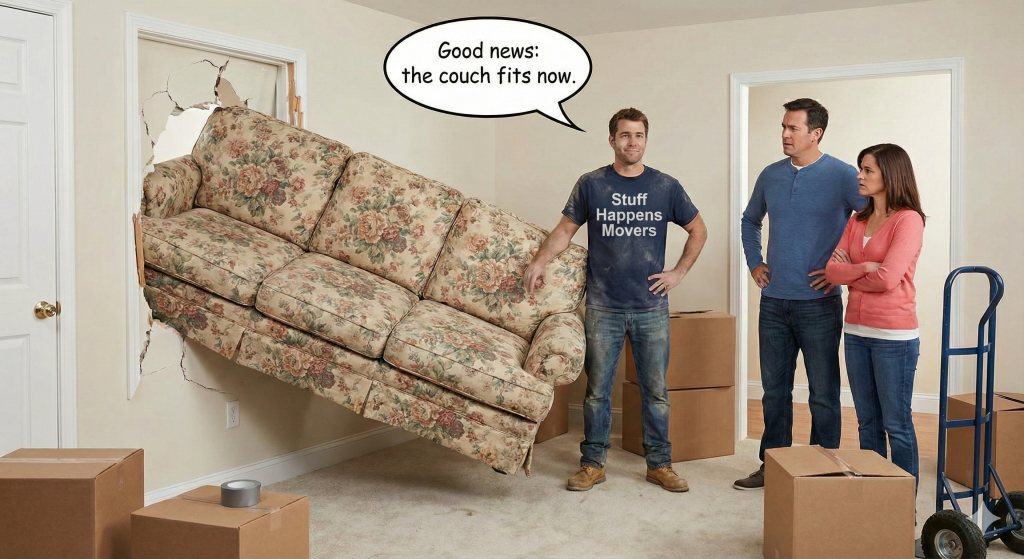
Let’s talk about the damage nobody plans for, everybody argues about, and somehow always happens near the end of a long day: Real Property Damage.
RPD is the stuff that doesn’t move with the customer – walls, door frames, floors, stairs, railings, elevators, driveways, sprinklers, fences, curbs. Basically, everything the homeowner loves and the crew swears they “barely touched.”
It’s also one of the most common claims in the household goods world. The good news? A lot of it is avoidable. The bad news? Most RPD claims aren’t about the damage itself – they’re about how the move was handled when it happened.
Let’s break it down, mover-style.
1. RPD Prevention Starts Before the Truck Even Shows Up
If your first look at the house is when you’re already carrying a dresser, you’re already behind.
A real pre-move walkthrough matters. Tight turns. Narrow staircases. Low ceilings. Soft flooring. Decorative railings that look sturdy but absolutely are not. Landscaping that screams “I will be a claim.”
Find all of it before you start moving.
And for the love of all things padded, use the right equipment. Floor runners, wall protectors, door jamb covers, liftgate pads, driveway boards – these aren’t “nice-to-haves.” They’re the difference between a clean delivery and a phone call three days later that starts with, “So… we noticed something.”
Also: slow down. Rushing turns minor scuffs into cracked trim and chipped stone faster than you think.
And if something’s already damaged? Write it down. Take photos. Because “that was already there” means nothing if it’s not documented.
2. If the Customer Refuses to Sign, Don’t Panic – Document Like a Pro
Customers refusing to sign happens. It’s not the end of the world. But how you handle it matters.
If it happens, your paperwork should clearly say:
“Customer Refused to Sign at Delivery”
Add the date. Add the time. Have a crew member or supervisor sign it.
This shows the documents were presented, the customer had the opportunity to note damage, and the refusal was their choice – not your failure.
No arguing. No drama. Just clean, boring, beautiful documentation.
3. RPD Claims Usually Hit Liability Insurance – Even If You Pay Out of Pocket
From FMCSA’s perspective, real property damage claims belong with your liability insurance.
In reality, many movers choose to pay RPD claims themselves to avoid premium hikes, policy cancellations, or awkward insurance conversations.
That’s a business decision – but it doesn’t mean you skip the process.
Even if you pay out of pocket:
- Acknowledge the claim
- Document the resolution
- Put the settlement in writing
Because verbal agreements fade faster than shrink wrap in August.
4. Never Move Without the Customer Present. Ever. Seriously.
This one causes more problems than almost anything else.
Never do a pickup or delivery if the customer isn’t there – unless they’ve designated an authorized representative in writing.
That authorization should spell out:
- Who the representative person is
- That they can sign all move documents
- The date and address of the move
No customer. No authorization. No move.
Skipping this step opens the door to disputed damage, missing items, unenforceable contracts, and legal headaches that last way longer than the move itself.
5. Paperwork Isn’t Sexy – But It’s Your Best Defense
Good documentation does three things:
- Protects the mover
- Protects the customer
- Shows compliance and professionalism
When RPD happens, the real question isn’t if there will be a claim – it’s whether your paperwork tells a clear, believable story.
Because the cleanest move in the world can still turn ugly if it’s poorly documented.
Final Takeaway
Real Property Damage isn’t always preventable. Disputes are.
Movers who plan ahead, slow down, let customers inspect, document refusals properly, require presence and authorization, and handle claims consistently don’t just reduce risk – they protect their reputation and their sanity.
Good moves don’t end when the truck doors close.
They end with clear paperwork, clear communication, and nothing left to argue about.